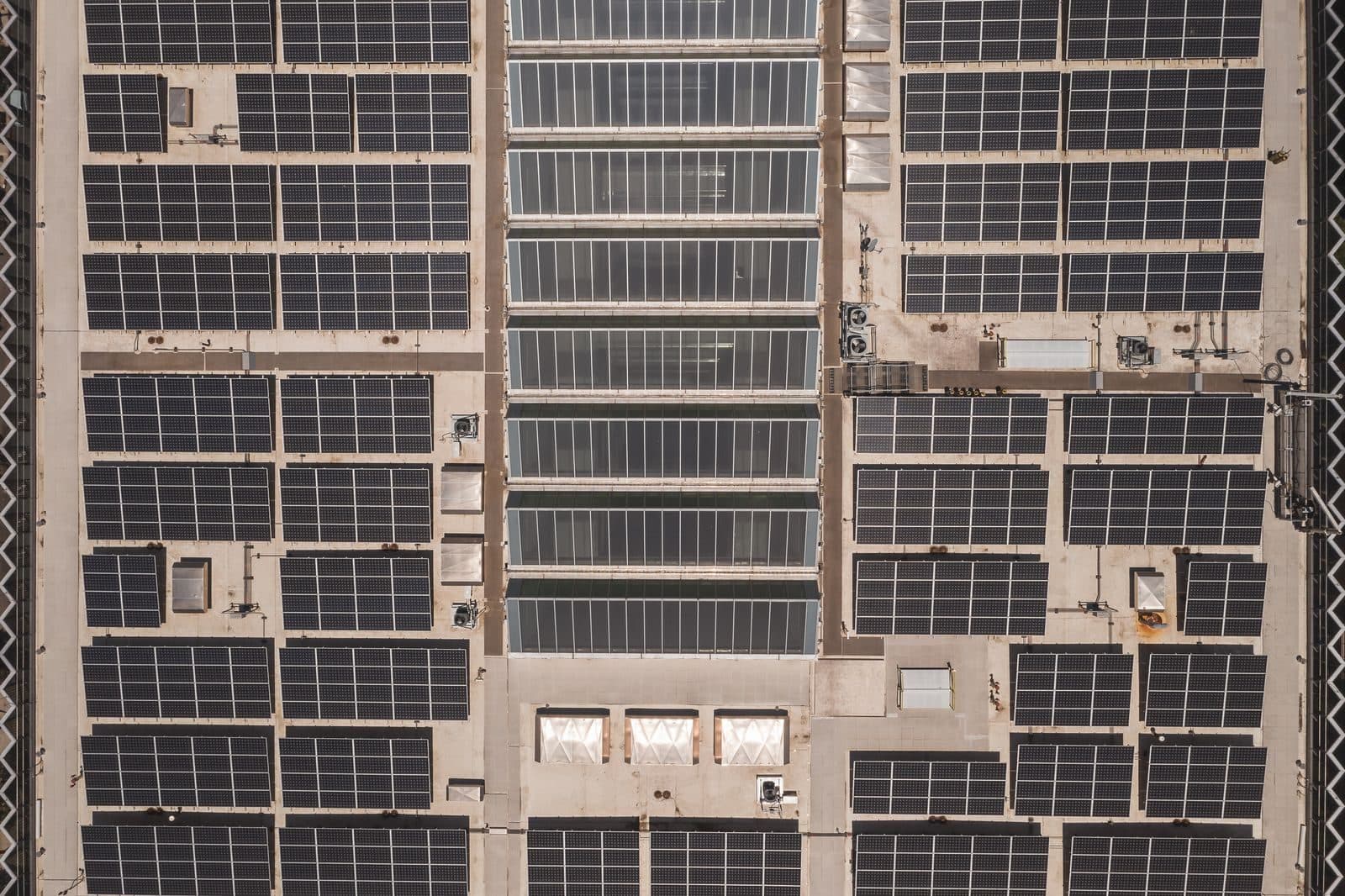
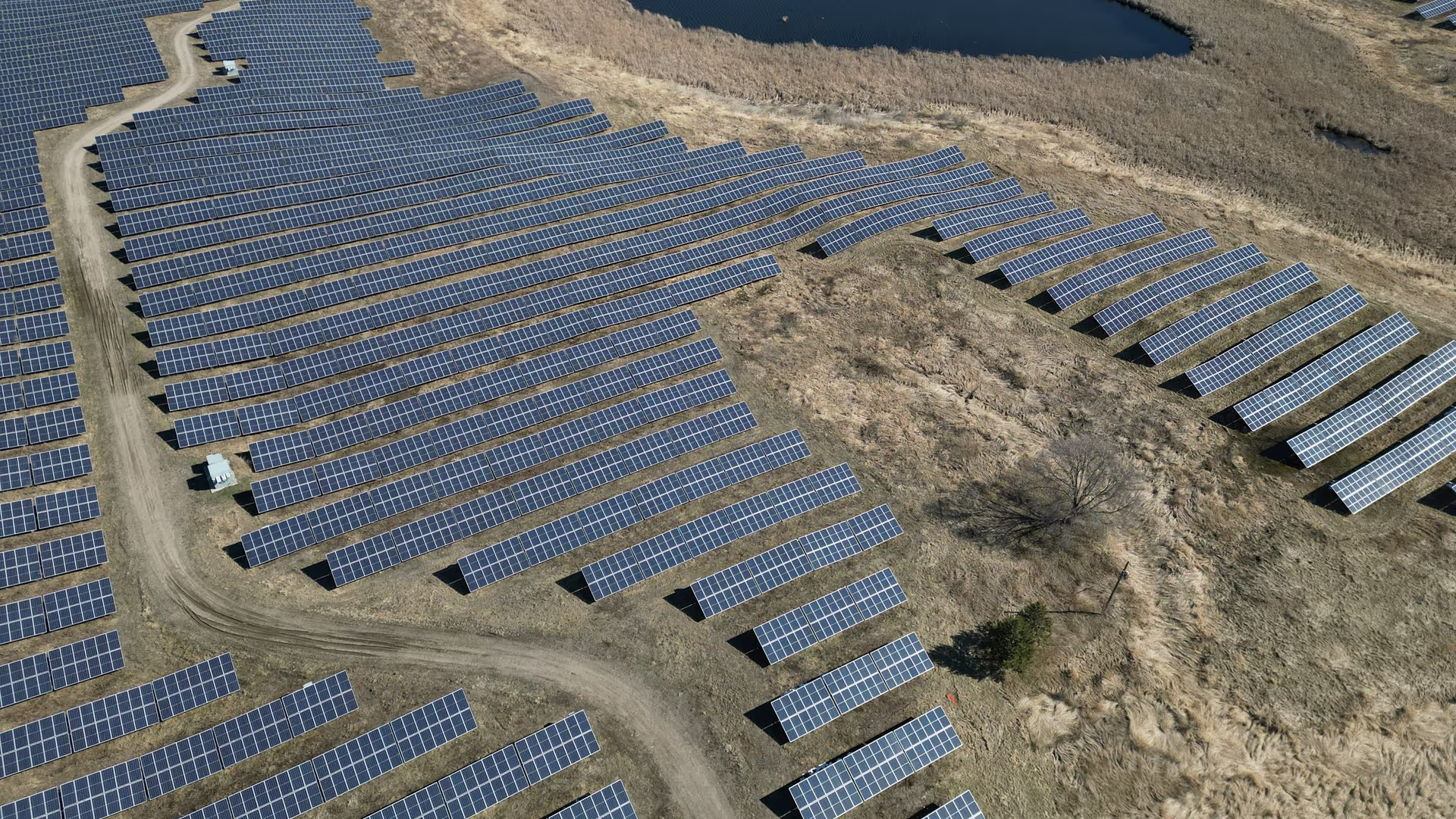
Problem territory · Power continuity
Power continuity solved around the asset, not the equipment.
Generation, storage, and continuity engineered against the load your site actually carries — not the vendor’s preferred datasheet. Industrial plant, institutional estates, and private residences, all delivered under a single senior partner.
- Installed capacity
- 4.2MWh
- Discharge
- 2.0MW
- Round-trip efficiency
- 87%
- Backup autonomy
- 2h
Representative figures for the asset class shown throughout the page. Every commissioned site carries its own measured spec in the as-built pack.
Mandate fit
Load profile before equipment.
Energy work starts with the demand curve, outage risk, and commercial posture. The equipment only enters the conversation after the operating case is written.
- 01
Measured baseline
Load logging, tariff review, and outage impact are captured before sizing.
- 02
Option discipline
Grid, hybrid, generator, and storage cases are compared in writing.
- 03
Commissioned handover
Protection, alarms, endurance runs, and documentation close under witness.
Capabilities
Six energy programmes under one partner.
The programme is chosen to fit the load and the site. We write the option analysis before we price the build.

Solar + battery + grid hybrids
Sized against the actual load profile, not the roof area. Written option analysis against diesel, grid-only, and hybrid scenarios before any procurement.

Critical-load continuity
Data rooms, cold chain, process lines, and life-safety systems engineered to ride through outages without operator intervention.

Standby + prime generation
Diesel, gas, and hybrid sets specified for the site acoustic, emissions, and duty profile. Synchronisation and paralleling where the load demands it.

Industrial energy optimisation
Motor audits, variable-speed retrofits, heat recovery, and compressed-air rationalisation. Measured savings, not vendor projections.

Institutional + estate supply
Hospitals, hotels, schools, and mixed-use campuses. MV distribution, transformer sizing, and metering that supports genuine cost accountability.

Residential off-grid + hybrid
Principal residences and estates engineered for silent redundancy. Battery-first architectures, hidden plant rooms, and long service intervals.
Evidence
Risk first, equipment second.
Four declarations, drawn from the firm’s own record. The practice line is named, the voltage range is stated, the office list is public, and the risk posture is disclosed in writing before any equipment is specified.
Record of practice
i — iv · as at 2026
- ILineage
2022
Year the energy + automation practice was formalised as a standalone line
- IIScope
MV / LV
Full-voltage-range design and protection engineering
- IIIFootprint
6 offices
Vienna · Lisbon · Bucharest · Lagos · Abuja · Accra
- IVStanding
Independent
No equipment-vendor rebates or resale margin on specified kit
Signed by the senior engineer of record at the close of every engagement. Kept on file, reissued on request.
Delivery
Baseline. Option. Build. Steward.
Four stages, one partner across all of them. The baseline data is always written down before any equipment is proposed.
- 01
Baseline
Metered load logging, tariff review, and site walk. We quantify the load before anyone sells the solution.
- 02
Option analysis
Written comparison of scenarios with capex, opex, and carbon. Vendor-independent — we are not paid on equipment margin.
- 03
Build + commission
Installation, protection testing, witnessed load transfer, and handover under the name of the partner who signed the scope.
- 04
Stewardship
Metered outcomes against the baseline, planned replacements, and quarterly reviews by the engineers who designed it.
Indicative cost profile
share of total engagement
Before → after
Stabilise uptime and cost.
What a correctly-sized storage and EMS package typically delivers for a mid-sized industrial or commercial site. Numbers below are the shift we commit to model in writing before any kit is ordered — not vendor marketing averages.
Energy cost
▼ 10 – 20% tariff savingsBefore
100% baseline
100%
After
80 – 90%
85%
Uptime
▲ Critical-load stabilityBefore
96.0%
90%
After
99.5%
100%
Peak charges
▼ ≈ 30% reductionBefore
100% baseline
100%
After
≈ 70%
70%
Diesel runtime
▼ ≈ 45% fewer hoursBefore
100% baseline
100%
After
≈ 55%
55%
Asset class
The kit we commission.
A working portfolio of the storage, hybrid, and grid-interconnection assets ASE specifies, installs, and stands behind — representative images of the asset class, not individual client sites.

Utility-tied storage
132 kV grid interconnection.
MV protection, neutral-earthing, and POI metering engineered in-house — not subcontracted.

Hybrid solar + storage
Solar-plus-storage.
Dispatch strategy and protection scheme written before any vendor proposes kit.

PCS + transformer
Power-conversion skid.
Paralleled PCS with step-up transformer, commissioned under our test engineer.

Asset-class scale
Utility-scale BESS.
The asset class we deliver for industrial and institutional clients across Europe and West Africa.
System architecture
How your site stays up.
A single-line view of the energy platform we design, commission, and monitor. Every line here is a protection setting, a measured value, and a handover document.
01 / EMS
ASE 24/7 monitoring
Telemetry: EMS -> POI metering | EMS -> PCS inverter
02 / Utility grid
11 – 132 kV
Utility grid <-> POI metering
03 / POI metering
Protection + CT
Utility grid <-> POI metering | POI metering -> Step-up / down | Telemetry: EMS -> POI metering
04 / Step-up / down
MV ↔ LV
POI metering -> Step-up / down | AC bus: Step-up / down -> Site load | AC coupling: Step-up / down <-> PCS inverter
05 / Site load
Critical · non-critical
AC bus: Step-up / down -> Site load
06 / Solar array
DC coupled
Solar array -> PCS inverter
07 / PCS inverter
AC ↔ DC
Solar array -> PCS inverter | Charge · discharge: PCS inverter <-> BESS | AC coupling: Step-up / down <-> PCS inverter | EMS -> PCS inverter
08 / BESS
Li-FePO₄ · BMS
Charge · discharge: PCS inverter <-> BESS
- Power path
- Generation / storage
- Telemetry / control
Indicative single-line. Actual topology is set by your load profile, utility interconnection, and resilience requirements.
Commissioning checklist
Six gates before the site is yours.
Each step below is run by a named technical lead, signed off in writing, and attached to the commissioning file. Click any step to see the sub-checks that have to close before we move on.
Typical on-site schedule
≈ 22 days total
01
Protection and safety review
Single-line diagram, earthing, and isolation points verified against the stamped design package.
Before any energy flows, we prove the protection scheme on paper matches what was actually built. Mis-labelled isolation points and under-sized earthing are the two most common causes of avoidable incidents at commissioning — both are closed out here, in writing, under witness.
- Typical duration
- 2 – 3 days on site
- Witnesses
- ASE lead engineer, client HSE officer, OEM commissioning engineer
- Document produced
- Stamped protection and earthing sign-off report
Sub-checks that must close
- Single-line diagram walked against the as-built layout; discrepancies logged and closed under change-control.
- Earthing resistance measured at every star-point and compared to the design target (< 1 Ω typical, < 5 Ω maximum).
- Neutral-earthing arrangement (TN-S, TN-C-S, or IT) verified against utility requirements and documented in the O&M file.
- Lock-out / tag-out points labelled, photographed, and added to the site operating manual with a named permit-holder.
- Fire detection, gaseous suppression, and emergency-stop chains tested end-to-end under witness with dated video evidence.
- Arc-flash study reviewed; PPE category labels fixed to every switchboard and MV cabinet door.
- Protection relay settings (time-current curves, ground-fault pick-up, under/over-voltage) loaded and witness-tested by secondary injection.
02
Factory acceptance test (FAT) review
PCS, BMS, and EMS tests witnessed and signed off at the manufacturer before any shipment.
A battery system that fails after delivery costs the client 8 – 16 weeks of slipped programme and an insurance argument. We go to the factory, run the tests ourselves, and sign the shipping release only when the results match the contract — not the datasheet.
- Typical duration
- 3 – 5 days at OEM facility
- Witnesses
- ASE senior engineer, independent witness (client or insurer), OEM test lead
- Document produced
- Signed FAT report with annexed firmware manifest
Sub-checks that must close
- Cell-level state-of-charge balancing verified across a full charge-discharge cycle under rated thermal load.
- Battery management system alarm matrix exercised: over-voltage, over-temperature, imbalance, contactor welding, cooling-fan failure.
- Power-conversion system tested across the full reactive-power envelope (PQ curve) at rated kVA for one hour per quadrant.
- Firmware versions locked in writing; delta-list versus the last approved build signed by both sides with release-note reference.
- Grid-code compliance (LVRT, frequency ride-through, reactive support) demonstrated against the utility-interconnection agreement.
- Communication stack (Modbus TCP, IEC 61850, DNP3 — whichever applies) traffic-captured and replayed against the SCADA reference.
- Serial numbers of every cell, rack, PCS, and transformer logged to the digital twin before the shipping container is sealed.
03
Site installation and cold checks
Mechanical, electrical, and cable-management checks before any system is energised on site.
The most expensive defects are the ones buried behind cable trays and bolted enclosures. We walk every connection before energisation — calibrated torque tool in hand — so the commissioning window is used for performance, not rework.
- Typical duration
- 5 – 10 days depending on scale
- Witnesses
- ASE resident engineer, installation subcontractor supervisor, client estates manager
- Document produced
- Installation verification dossier with torque and megger logs
Sub-checks that must close
- Container placement, anchoring torque, and ventilation clearances verified against the vendor installation manual and wind-load calculation.
- Cable routing, segregation (HV / LV / data), fire-stopping, and bend-radius documented with geo-tagged photos.
- Torque check on every busbar and lug connection with a calibrated tool; witnessed, counter-signed, and recorded to the asset register.
- Insulation-resistance (megger) results logged per circuit at 500 V / 1 kV / 5 kV as appropriate; trend compared to handover baseline.
- Cooling system (HVAC, liquid-cooling manifold) leak-tested, glycol concentration verified, set-points loaded.
- Control cabinet phasing, neutral continuity, and CT polarity confirmed before any contactor is closed.
- Climate-control, dust-ingress, and rodent-protection measures signed off against the site environmental assessment.
04
Energisation and functional commissioning
First-energise, interlock validation, and sequence-of-operation signed off under engineer witness.
First-energisation is the single highest-risk gate of the programme. Every interlock, every source transfer, and every auxiliary must work on the first attempt under the attending engineer’s signature — not the second attempt after a fault.
- Typical duration
- 3 – 5 days
- Witnesses
- ASE partner, utility DNO representative (where grid-tied), client control-room operator
- Document produced
- First-energisation log with oscillograph captures
Sub-checks that must close
- Soft-start sequence run with partial load; every protection trip tested via secondary injection and captured on oscillograph.
- Generator / grid / BESS source transfer executed in both directions without open-transition glitches; transfer time recorded.
- Interlocks: BESS-to-genset, BESS-to-grid, and manual-bypass chains tested in sequence and mechanically locked under tag.
- Auxiliary systems (HVAC, fire, UPS for controls) verified under primary-source failure for a full 30-minute run.
- Black-start capability demonstrated from 0 V bus to critical-load pickup within the design window (typically < 60 seconds).
- Synchronisation window verified: voltage < 5%, frequency < 0.2 Hz, phase angle < 10° before any breaker close.
- Operator walk-through on the live HMI; every alarm acknowledged and every trip reset procedure rehearsed under supervision.
05
Performance and endurance run
Seven-day unattended run confirming charge-discharge performance against the design contract.
A seven-day endurance run is where vendor marketing claims meet the actual heat, the actual load, and the actual dispatch schedule. The certificate we issue at the end is the document the lender, the insurer, and the auditor will ask for first.
- Typical duration
- 7 consecutive days, 24 / 7
- Witnesses
- ASE performance engineer on standby; remote monitoring via ASE control room
- Document produced
- Performance-guarantee acceptance certificate
Sub-checks that must close
- Rated round-trip efficiency measured across three full cycles at design C-rate; 2% tolerance against guarantee.
- Dispatch schedule (peak-shave, tariff-shift, or backup) run against live site load for seven consecutive days.
- Thermal profile of each cabinet logged at one-minute resolution; maximum-temperature corridor compared to vendor envelope.
- State-of-health drift, cell-voltage spread, and self-discharge rate recorded and trended against the FAT baseline.
- Grid-services response time (frequency regulation, voltage support) measured against the utility-interconnection agreement.
- Cybersecurity penetration check against the EMS, BMS, and PCS northbound interfaces; findings closed or documented as accepted risk.
- Any deviation greater than 2% against the design contract logged, root-caused in writing, and closed before handover.
06
Monitoring, alarms, and handover
EMS dashboards, alert routing, and the full documentation pack delivered to the named operator.
A system that is live but has no named operator, no routed alarms, and no indexed manuals is a liability. Handover closes when the first real event is responded to correctly — not when the last engineer drives off site.
- Typical duration
- 2 – 3 days
- Witnesses
- ASE engagement partner, client facility manager, named O&M contractor
- Document produced
- Sealed commissioning file (digital + hardcopy) with 12-month warranty schedule
Sub-checks that must close
- EMS dashboards configured per operator role: control-room watchstander, engineering manager, executive summary.
- Alarm routing to SMS, email, and on-call rota tested with simulated events, end-to-end, across all severity tiers.
- As-built drawings, O&M manuals, spare-parts list, and warranty plan delivered as a single sealed and indexed document set.
- Digital twin populated: nameplate data, serial numbers, firmware versions, and maintenance intervals loaded to the CMMS.
- First 90 days of planned preventive-maintenance tasks scheduled and assigned to a named technician on the O&M contract.
- Named ASE engineer assigned as escalation contact on the service retainer from day one, with a written 4-hour response SLA.
- 30, 90, and 180-day performance-review dates booked in writing with the client before the commissioning file is closed.
Next step
A partner-level energy review.
Thirty minutes with a senior partner. You leave with a written summary of the load, the realistic options, and a direct line back to the partner.